

- Overview
- Trip Agenda
- Trip Includes
- Trip Excludes
- Gallery
- Reservations
- FAQ
No details found.
Itineraries
Day 1
Date : April 26, 2020
Time : 8:00 am
Meet & Greet, Smithsonian Museums
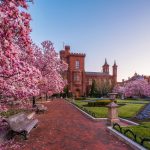
The Smithsonian Castle is the signature building and home to the Smithsonian Visitor Center. During our visit to the Castle, we will get a grasp of the scope and scale of the Smithsonian, see collection highlights from each of our museums, tour the Castle’s 19th-century architecture, see what’s going on at all the museums, and consult with their in-house experts about what to see and do. It’s the perfect place to visit in order to prepare for a day visiting the various Smithsonian museums!
The world’s biggest museum and research facility — the Smithsonian Institution — is every art, history, or culture lover’s dream. There are quite a few museums and galleries on the National Mall (listed below). We’ll set aside a “free day” for families to choose and visit whichever museums they want, so plan ahead! As mentioned above, we’ll all visit the Smithsonian Institution Building (aka The Castle). Then each family will be able to visit whichever of the following museums they like:
The National Museum of Asian Art
Enid A. Haupt Garden
Museum of African Art
Hirshhorn Museum and Sculpture Garden
National Air and Space Museum
National Museum of the American Indian
National Museum of Natural History
National Museum of American History
National Museum of African American History and Culture (NMAAHC)
Day 2
Date : April 27, 2020
Time : 8:00 am
Spy Museum / National Portrait Gallery / Monument Walk

The International Spy Museum is the only public museum in the United States dedicated to the tradecraft, history, and contemporary role of espionage. We will experience their interactive exhibits and installations, the foremost collection of spy artifacts in the world, and first-person accounts from top intelligence officers and experts. In other words, we will become spies. We’ll learn about the hidden world of intelligence and espionage that have played critical roles in our past and are important now and in the future too.
The Museum’s mission is to educate the public about espionage and intelligence in an engaging way and to provide a context that fosters understanding of their important role in, and impact on, current and historic events. We will go undercover and test our spy skills on a mission as we travel the permanent exhibitions. We’ll also each get a secret spy identity! This enables the tracking of each spy’s performance and is used to provide needed information for debriefing upon the conclusion of the mission.
Now that we have been fully trained, each agent will receive a mission for each location we visit. The first stop will be the National Portrait Gallery. There we will use our spy skills to uncover information about the faces and stories of the people who shaped our nation. I wonder how many of them were spies and we never found out! We will spend time seeing the “American Origins” exhibit where we will browse through the galleries to see Pocahontas, Benjamin Franklin, Harriet Beecher Stowe, John Brown, Sojourner Truth, and others who shaped the country. We will also see the “America’s Presidents” gallery which features every U.S. president, including Gilbert Stuart’s “Lansdowne” portrait of George Washington, Mathew Brady’s “cracked-plate” portrait of Abraham Lincoln, and likenesses of Andrew Jackson, Theodore Roosevelt, Franklin Roosevelt, Lyndon Johnson, Jimmy Carter, and George H.W. Bush.
Day 3
Date : April 28, 2020
Time : 8:00 am
National Archives / Ford Theater / Arlington National Cemetery

Another stop on our tour is the National Archives Building. Years before the first Archivist of the United States was appointed — before the National Archives and Records Administration even existed — architect John Russell Pope and his team were busy drawing up plans for the National Archives Building in Washington, D.C. Since its opening in 1935, this magnificent neoclassical revival building on Pennsylvania Ave, halfway between the White House and the U.S. Capitol, has drawn researchers and visitors from around the globe who have come to research their own family histories and to explore the most important records of our democracy. Today, researchers enter the building on Pennsylvania Avenue, while other visitors enter on Constitution Avenue to explore exhibits and programs at the National Archives Museum.
All good spies will want to see Ford’s Theatre where Abraham Lincoln’s legacy lives. When we visit Ford’s Theatre, we will step back in time. While at the historic site, we will learn about the events of April 14, 1865, and the lasting impact of Lincoln’s assassination on our nation. This very popular Washington, D.C., tourist destination welcomes more than 650,000 visitors a year.
Discover Arlington National Cemetery’s rich history, witness the time-honored ceremonies, take in the scenic landscapes and grounds, wander through the headstones and monuments, reflect on the names, and ponder the stories each person could tell. Twenty-four hours a day, soldiers from the 3rd U.S. Infantry Regiment, known as “The Old Guard,” stand watch over the Tomb. The Tomb Guards, also called Sentinels, are chosen for this prestigious and highly selective post only after rigorous training and a demanding series of examinations (see below). The Old Guard has held this distinguished duty since 1948.
Day 4
Date : April 29, 2020
Time : 8:00 am
Capitol Hill / Library of Congress / Supreme Court / Washington Monument / National Mall

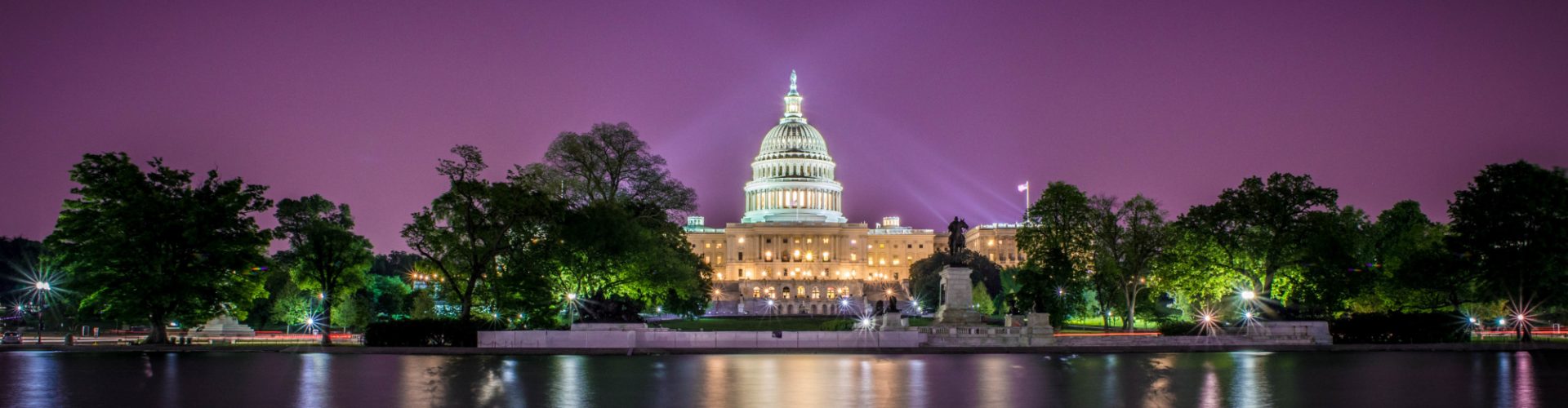
The United States Capitol is a monument, a working office building, and one of the most recognizable symbols of representative democracy in the world. The Capitol Visitor Center, the main entrance to the U.S. Capitol, is located beneath the East Front plaza of the U.S. Capitol at First Street and East Capitol Street.
The Library of Congress is the largest library in the world! There are literally millions of books, recordings, photographs, newspapers, maps, and manuscripts in it collections. The Library is the main research arm of the U.S. Congress and the home of the U.S. Copyright Office. The Library preserves and provides access to a rich, diverse, and enduring source of knowledge to inform, inspire, and engage you in your intellectual and creative endeavors.
The Supreme Court Building, majestic in size and rich in ornamentation, serves as both home to the nation’s highest Court and the manifest symbol of its importance as a coequal, independent branch of government. Although the Supreme Court does not offer guided walking tours, visitors are encouraged to tour public portions of the building on a self-guided basis and take advantage of a variety of educational programs, including courtroom lectures, a visitor film, and court-related exhibitions. In addition to the Courtroom, portions of the first and ground floors are open to the public. Highlights include the John Marshall statue, portraits and busts of former Justices, and two self-supporting marble staircases. The Courtroom is located on the first floor.
The Washington Monument was designed by Robert Mills and eventually completed by Thomas Casey and the U.S. Army Corps of Engineers. It honors and memorializes George Washington at the center of the nation’s capital. The structure was completed in two phases of construction, one private (1848-1854) and one public (1876-1884). Built in the shape of an Egyptian obelisk, evoking the timelessness of ancient civilizations, the Washington Monument embodies the awe, respect, and gratitude the nation felt for its most essential Founding Father. At the time it was completed, the Washington Monument was the tallest building in the world at 555 feet, 5-1/8 inches.
According to the American Institute of Architects, half of Americans’ top 12 favorite architectural gems line the National Mall. There’s no denying the significance of the Mall for its symbols to American history and for its uniquely designed monuments. So, when you come to D.C., it’s likely that these world-famous monuments and memorials will be at the top of your must-see list. That is why they are on our list too! Touring Washington, D.C.’s monumental core at night will give us a different perspective. Crowds are smaller and the city is quieter, so we’ll have more time for reflection and for truly enjoying the monuments. The memorials are run by the National Park Service (NPS), and they are usually staffed by NPS Rangers who can answer our questions and give us information from 9:30 a.m. – 10 p.m.
Day 5
Date : April 30, 2020
Time : 8:00 am
Arboretum / Add-on Holocaust Museum

Discover a stunning collection of plants and Instagram-worthy sights at the Arboretum! Established in 1927 by an act of Congress, the Arboretum aims to increase the aesthetic, environmental, and economic importance of landscape and ornamental plants. The attraction does so through gardens and exhibits, long-term botanical research, and conservation of resources. And on this gorgeous, 446-acre property you will find the iconic Capitol Columns, making it an inspiring and visually captivating visit at any time of the year.
The United States Holocaust Memorial Museum is the United States' official memorial to the Holocaust. Adjacent to the National Mall in Washington, D.C., the USHMM provides for the documentation, study, and interpretation of Holocaust history.
Day 6
Date : May 1, 2020
Time : 8:00 am
Add-on Museum of the Bible
Experience The Bible Like Never Before. Over 3500 Years Of Biblical History. Immerse Yourself With Exhibits Featuring Ancient Artifacts, Manuscripts, And More. Rare Biblical Texts. Learn About the Bible. Bible Exhibits & Archives
No details found.
No details found.
No Details Found